A cohesive, high-quality uniform does far more than satisfy a dress code. It is an extension of your brand identity, a tool for team unity, and a crucial factor in employee safety and comfort. Whether you are sourcing heavy-duty workwear for an industrial workforce, polished attire for a luxury hospitality group, or durable daily wear for a large educational institution, your choice of a uniform manufacturer will directly impact your brand reputation and operational budget.
Unlike standard fashion retail production, uniform manufacturing requires a strict focus on durability, consistency over multi-year cycles, and exact functional performance.
If your organization is looking to design, update, or scale its apparel program, here is a strategic guide on how to select the perfect manufacturing partner.
1. Fabric Engineering and Technical Performance
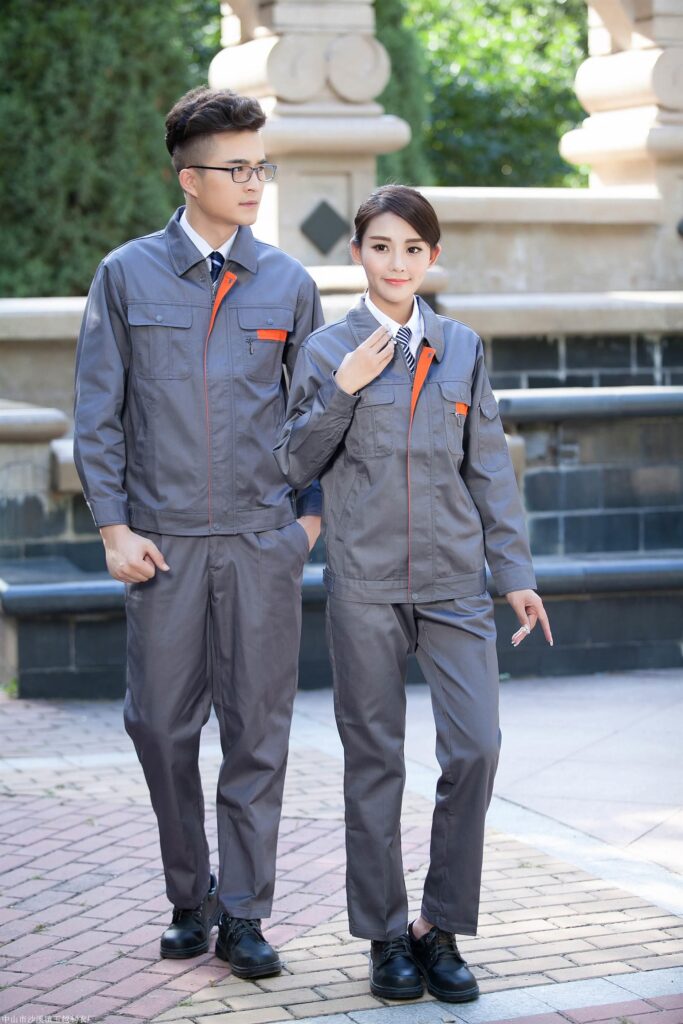
Uniforms are subjected to significantly more wear, friction, and frequent washing than standard consumer clothing. Therefore, the fabric performance must be exceptional. When vetting a potential custom uniform manufacturer, ask about their technical textile options and sourcing capabilities.
Depending on your industry, your garments may require specific fabric engineering:
- Corporate & Hospitality: Look for high-density poly-wool or cotton-spandex blends that offer wrinkle resistance, mechanical stretch, and breathability for long shifts.
- Healthcare & Medical: Demand antimicrobial fabrics, fluid-resistant barriers, and colorfast materials that can withstand high-temperature industrial laundering without shrinking or fading.
- Industrial & Workwear: Ensure the factory can source heavy-weight canvas, ripstop fabrics, and specialized materials that offer flame resistance (FR), high visibility (EN ISO 20471 compliance), or anti-static properties.
2. Long-Term Supply Consistency and Re-Order Flexibility
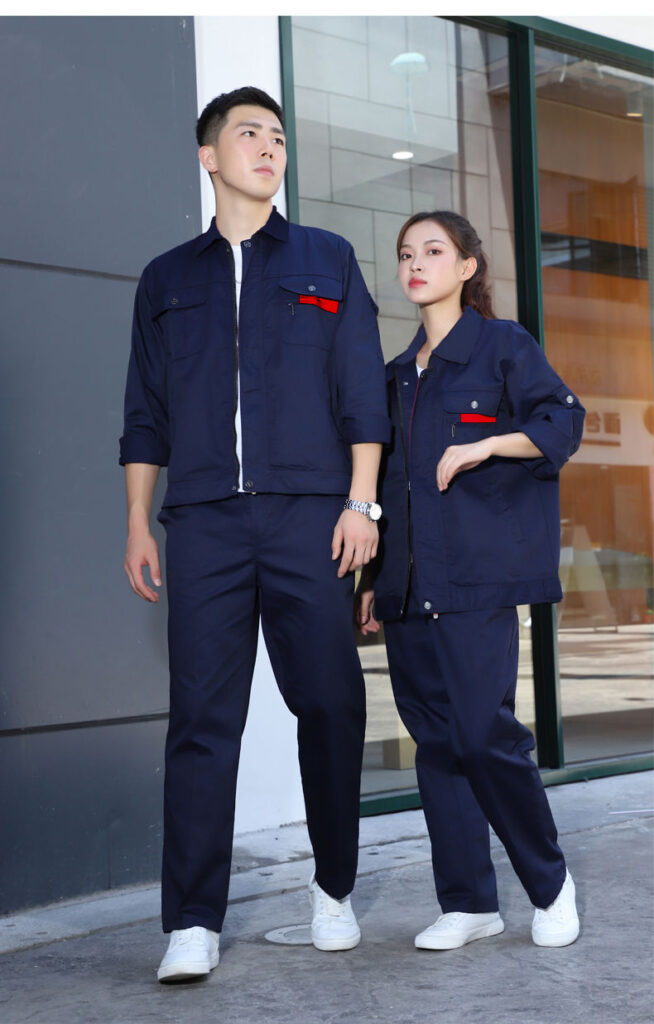
One of the biggest pitfalls organizations face when partnering with a standard apparel factory is the lack of long-term fabric availability. In the fashion world, fabrics change every season. In the uniform world, you need the exact same fabric weave and color tone available two, three, or five years down the line when you hire new staff.
A dedicated uniform clothing manufacturer manages this through programmatic fabric banking:
The Fabric Continuity Rule: A reliable uniform partner maintains consistent dye-lot standards and keeps a reserve of your specific fabric or yarn formulation in stock. This ensures that a shirt ordered in 2026 matches the color and texture of a shirt ordered in 2029 perfectly.
Additionally, clarify their policy on small-batch re-orders. While your initial launch order might be large, you will inevitably need to order smaller quantities throughout the year as new employees join your team.
3. Customization, Embroidery, and Corporate Branding
Your uniform is a walking billboard for your organization. The factory must possess advanced decoration machinery to execute your branding flawlessly.
Ensure your apparel factory offers a variety of durable customization methods:
- High-Definition Embroidery: The preferred choice for corporate blazers, polos, and hospitality aprons. It provides a premium, dimensional texture that withstands heavy commercial washing.
- Heat-Transfer & Screen Printing: Ideal for high-visibility workwear or lightweight sportswear uniforms where heavy embroidery might irritate the wearer’s skin.
- Custom Hardware: Ask if they can source custom-branded buttons, zippers, and color-matched edge trims that give your uniforms a tailored, professional finish.
4. Size Inclusivity and Fit Accuracy
To keep employee morale high, uniforms must fit comfortably across all body types. A professional factory will not rely on a generic “one size fits most” grading scale. They should provide comprehensive size charts spanning from XS to 5XL+ and offer distinct patterns for both male and female cuts.
Review the technical parameters below to evaluate how advanced factories manage size grading for large corporate programs:
| Industry Sector | Primary Fit Requirement | Key Construction Detail |
| Hospitality / Retail | Elegant yet flexible | Action-backs on jackets, stretch lining |
| Logistics / Delivery | High mobility, climate control | Underarm gussets, moisture-wicking zones |
| Industrial / Trade | Safety, abrasion resistance | Reinforced triple-stitching, double knees |
| Corporate Office | Tailored, professional profile | Adjustable waistbands, premium drapes |
5. Ethical Manufacturing and Regulatory Compliance
When sourcing apparel on behalf of an organization, school, or corporate entity, supply chain transparency is paramount. Partnering with a non-compliant factory can expose your organization to severe reputational risks.
Always check if the uniform garment factory holds international certifications, such as:
- Oeko-Tex Standard 100: Verifying that the uniforms are completely free from harmful levels of toxic dyes or chemical finishes.
- WRAP (Worldwide Responsible Accredited Production) or BSCI: Ensuring the factory strictly adheres to ethical labor practices, safe working conditions, and fair wages.
Conclusion: Partner for Operational Excellence
Choosing a manufacturing partner for your organization is not just about finding the lowest price per unit. It is about investing in a streamlined, dependable supply chain that delivers durable, comfortable, and beautifully branded clothing that your team is proud to wear every day.
Ready to upgrade your organization’s apparel program? Our state-of-the-art facility specializes in full-service uniform manufacturing, offering technical fabric sourcing, expert pattern engineering, premium corporate embroidery, and flexible re-order programs. Contact our B2B production team today to receive a detailed program consultation and custom quote.
