The global denim market remains one of the most resilient and profitable sectors in apparel retail. Because jeans are treated as a wardrobe essential rather than a passing trend, consumers are continuously searching for the perfect pair—one that offers the ultimate fit, premium durability, and an on-trend aesthetic. For fashion entrepreneurs, this consistent demand makes launching a private label denim brand a highly lucrative business venture.
However, denim production is distinctly different from standard apparel manufacturing. It is a highly technical discipline that blends industrial machinery with artisanal laundry techniques. To transition from a design concept to a fully realized collection of custom jeans, you need a structured operational strategy.
Here is a step-by-step manufacturing guide to building a successful private label denim line.
Step 1: Define Your Denim Fit and Target Niche
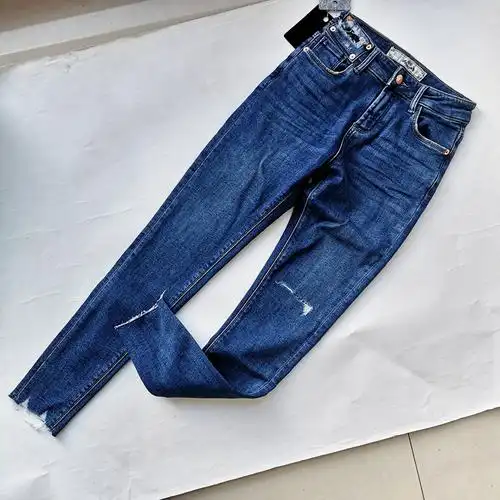
The denim market is highly segmented based on fit, style, and demographic. Before you approach jean manufacturers, you must define exactly where your brand fits in the competitive landscape.
Are you designing premium, 14-ounce rigid raw denim jeans for heritage menswear enthusiasts? Or are you launching ultra-comfortable, high-stretch skinny and straight-leg jeans for everyday consumer wear?
Define your core product attributes early:
- The Silhouette: Straight leg, wide leg, skinny, bootcut, baggy, or cropped.
- The Rise: High-rise, mid-rise, or low-rise.
- The Price Tier: Mid-market contemporary, premium luxury, or accessible streetwear.
Step 2: Establish the Technical Blueprint (The Tech Pack)
Because denim shrinks unpredictably during the wet washing process, your design specifications must be exceptionally precise. You must provide your apparel factory with a comprehensive Tech Pack.
A professional denim tech pack must include technical flat vector drawings with clear callouts for:
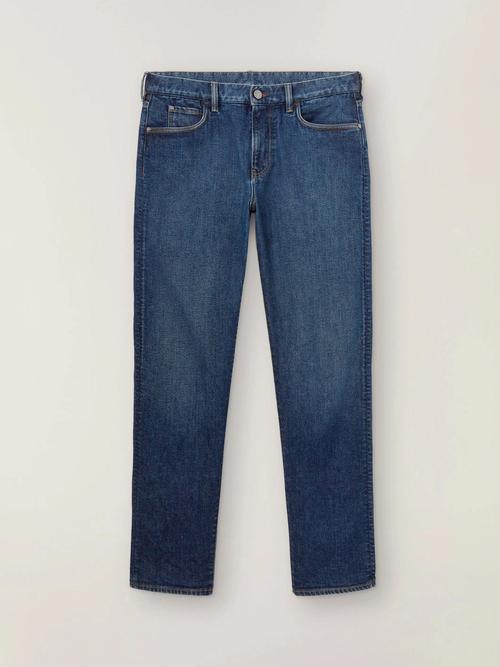
- Pocket Architecture: Detail the exact shape, size, and placement of the front scoop pockets, the coin pocket, and the back patch pockets.
- Stitching Configurations: Specify your thread colors (such as traditional contrast tobacco or modern tonal thread) and stitch weights. Clearly note where double-needle topstitching or chain stitching is required for structural reinforcement.
- Hardware Placement: Map out the precise locations for metal rivets, the fly closure (button fly vs. zipper fly), and the waistband brand patch (leather, vegan leather, or paper jacron).
Step 3: Choose Between Raw Denim and Pre-Washed Production
When launching a private label line, you must decide how the final product will feel and look when it arrives at the consumer’s doorstep. This dictates your manufacturing workflow.
Raw (Dry) Denim Production
Raw denim skips the industrial laundry phase entirely. The jeans are cut, sewn, packed, and shipped in their natural, unwashed state. They are stiff to the touch and deep indigo in color. This option has lower manufacturing costs and appeals to denim purists who want to break in the jeans naturally over time to create personal fade patterns.
Pre-Washed and Distressed Denim Production
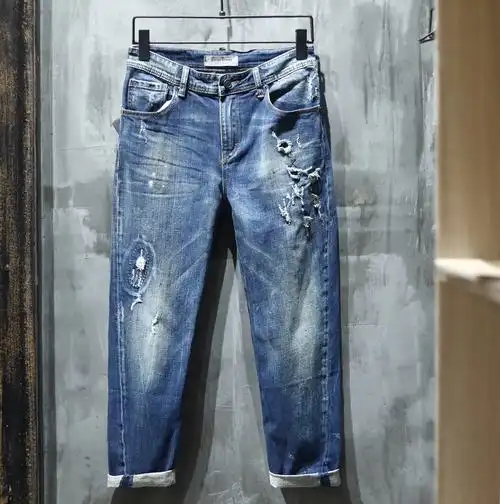
The vast majority of consumers prefer jeans that are soft and broken-in from day one. If this is your target market, your custom jean manufacturer will send the sewn garments to an industrial commercial laundry. Here, the jeans undergo stone washing, bleaching, scraping, or laser whiskering to achieve specific colors (like light-wash vintage blue) and soft textures.
Step 4: Prioritize Sustainable Denim Sourcing and Washing
Modern consumers are highly conscious of the environmental impact of fashion. Historically, denim production has been notorious for heavy water consumption and chemical usage. To future-proof your private label brand, select a factory that prioritizes sustainable manufacturing methods.
When vetting denim factories, look for these eco-friendly capabilities:
- Recycled and Organic Fabrics: Sourcing denim blends made from GOTS-certified organic cotton, recycled cotton, or TENCEL™ Lyocell to reduce agricultural impact.
- Laser Distressing Technology: Utilizing advanced lasers to burn vintage wear patterns onto the denim, completely replacing traditional, hazardous hand-scraping and chemical sandblasting techniques.
- Ozone and E-Flow Washing: State-of-the-art washing machines that use air and ozone gas rather than thousands of gallons of water to fade denim, reducing water and chemical consumption by up to 90%.
Step 5: Master the Sampling and Shrinkage Vetting Phase
The sampling phase is where a private label brand succeeds or fails. Denim fabric naturally shrinks when subjected to industrial washing and high-heat drying.
A premier denim clothing manufacturer will execute a rigorous shrinkage test protocol:
The Shrinkage Protocol: The factory cuts a standard 10×10 inch square of your chosen raw denim fabric, runs it through your desired wash cycle (e.g., a heavy stone wash), and measures the dimensions afterward. If the fabric shrinks by 5% horizontally and 3% vertically, the pattern makers expand your digital cutting patterns by those exact percentages so the final, washed jeans fit perfectly true-to-size.
Inspect your pre-production (PP) samples carefully. Put them on fit models, check that the pocket placement remains balanced after washing, and ensure the rivets and buttons are clamped securely without damaging the surrounding fabric.
Conclusion: Build a Foundation with the Right Factory
Launching a private label denim brand requires balancing your creative vision with technical execution. By understanding fabric weights, mastering the tech pack process, and choosing a manufacturing partner equipped with modern, sustainable wash technologies, you can deliver a premium product that commands high retail margins and secures long-term customer loyalty.
Ready to bring your custom denim designs to life? We are a leading private label jean manufacturer, offering full-scale production from initial fabric sourcing and pattern engineering to advanced eco-friendly laundry finishes. Contact our denim experts today to review your designs and receive a custom production quote.
